
Tips for maintaining a positive mindset every day sets the stage for this enlightening discussion, offering insights into the crucial aspects of balanced diet, mental wellness, physical fitness, hydration, stress management, preventive care, and quality sleep.
As we delve into each component, you’ll uncover valuable tips and strategies to nurture your mental health and cultivate a positive outlook on a daily basis.
Balanced Diet
Having a balanced diet is crucial for maintaining a positive mindset as it provides the necessary nutrients to support brain function and overall well-being.
Nutrient-Rich Foods for Mood Improvement
Consuming nutrient-rich foods can have a positive impact on mood and mental health. Some examples include:
- Fatty fish like salmon, rich in omega-3 fatty acids which are essential for brain health.
- Leafy greens such as spinach and kale, packed with vitamins and minerals that support cognitive function.
- Whole grains like quinoa and brown rice, providing a steady release of energy to keep you mentally alert.
- Nuts and seeds, containing healthy fats and antioxidants that promote brain health.
Impact of Clean Eating on Mental Wellness
Clean eating, which involves consuming whole, unprocessed foods, can significantly impact mental wellness. By avoiding processed foods high in sugar and artificial ingredients, you can regulate blood sugar levels and support a stable mood. Additionally, clean eating can reduce inflammation in the body, which has been linked to mental health conditions like depression and anxiety.
Mental Wellness
Maintaining a positive mindset is closely tied to mental wellness. When our minds are healthy and balanced, it becomes easier to approach challenges with a positive attitude and outlook on life. Here are some strategies to promote emotional balance and take care of our mental health on a daily basis.
Strategies for Promoting Emotional Balance
- Practice mindfulness: Taking time to be present in the moment can help reduce stress and anxiety.
- Engage in regular physical activity: Exercise releases endorphins that can boost your mood and overall mental well-being.
- Connect with others: Building strong relationships and social connections can provide emotional support and a sense of belonging.
- Set boundaries: Learning to say no when needed and prioritizing self-care can prevent burnout and promote emotional balance.
Role of Self-Care Practices in Maintaining Mental Health
- Get enough sleep: Prioritizing rest and establishing a bedtime routine can improve mental clarity and overall well-being.
- Practice relaxation techniques: Incorporating activities like meditation, deep breathing, or yoga can help reduce stress and promote relaxation.
- Engage in hobbies: Doing activities you enjoy can provide a sense of fulfillment and joy, boosting your mental health.
- Seek professional help when needed: Don’t hesitate to reach out to a therapist or counselor if you’re struggling with your mental health.
Physical Fitness: Tips For Maintaining A Positive Mindset Every Day
Regular exercise plays a crucial role in maintaining not only physical health but also mental well-being. Engaging in physical activity releases endorphins, often referred to as “feel-good” hormones, which can help reduce stress, anxiety, and symptoms of depression. Additionally, exercise promotes better sleep, boosts self-esteem, and improves overall cognitive function.
Benefits of Regular Exercise on Mental Health
- Reduces stress and anxiety levels
- Improves mood and boosts self-esteem
- Enhances cognitive function and memory
- Promotes better sleep quality
- Helps in managing symptoms of depression
Tips for Incorporating Daily Physical Activity
- Schedule regular workout sessions in your daily routine
- Choose activities that you enjoy to make exercise more enjoyable
- Set realistic goals and track your progress to stay motivated
- Take short breaks for stretching or walking throughout the day
- Involve friends or family in physical activities for social support
Contribution of Physical Fitness to Holistic Health
Regular physical fitness not only benefits mental health but also contributes to overall holistic well-being. It helps in maintaining a healthy weight, improving cardiovascular health, strengthening muscles and bones, and reducing the risk of chronic diseases. By incorporating physical activity into your daily routine, you can enhance your physical, mental, and emotional health, leading to a more balanced and fulfilling life.
Adequate Hydration
Staying properly hydrated is essential for maintaining cognitive function and overall well-being. Dehydration can lead to problems with focus, concentration, and mood, impacting our ability to stay positive and productive throughout the day.
Importance of Hydration for Cognitive Function, Tips for maintaining a positive mindset every day
Proper hydration is crucial for brain function as water helps deliver essential nutrients and oxygen to the brain. Dehydration can impair cognitive performance, memory, and decision-making abilities.
Ways to Ensure Adequate Hydration
- Carry a reusable water bottle with you wherever you go to remind yourself to drink water regularly.
- Set reminders on your phone or use hydration tracking apps to monitor your water intake throughout the day.
- Incorporate hydrating foods such as fruits, vegetables, and soups into your diet.
- Drink a glass of water before meals and snacks to help increase your overall fluid intake.
Impact of Hydration on Mood and Mindset
Hydration plays a significant role in regulating mood and mindset. Studies have shown that even mild dehydration can affect mood, energy levels, and overall mental well-being. By staying hydrated, you can support a positive mindset and enhance your ability to cope with daily stressors.
Stress Management
Effective stress management is crucial for maintaining a positive mindset as high stress levels can have a detrimental impact on mental well-being. Stress can lead to feelings of anxiety, irritability, and overwhelm, making it challenging to stay positive and focused.
By implementing stress management techniques, individuals can better cope with daily challenges and maintain a more optimistic outlook on life.
Mindfulness Meditation
- Practicing mindfulness meditation can help reduce stress levels by focusing on the present moment and cultivating a sense of calmness.
- By engaging in mindful breathing exercises and observing thoughts without judgment, individuals can learn to manage stress more effectively.
- Regular meditation practice can promote relaxation, improve mental clarity, and enhance overall well-being.
Physical Exercise
- Engaging in regular physical exercise, such as yoga, running, or dancing, can help reduce stress and boost mood-enhancing endorphins.
- Exercise is known to reduce cortisol levels, the stress hormone, and improve cognitive function, leading to a more positive mindset.
- Finding an exercise routine that fits your preferences and schedule can significantly impact stress management and mental well-being.
Creative Outlets
- Exploring creative outlets like painting, writing, or playing music can serve as a form of self-expression and stress relief.
- Engaging in creative activities can help individuals channel their emotions, reduce tension, and promote relaxation.
- Finding joy in creative pursuits can enhance overall happiness and contribute to a more positive mindset.
Preventive Care
Preventive care plays a crucial role in maintaining mental health by focusing on early intervention and proactive measures to prevent the onset of mental health issues.
By incorporating preventive measures into your daily routine, you can support a positive mindset and overall well-being. Here are some tips to help you prioritize preventive care:
Regular Health Check-ups
- Ensure to schedule regular check-ups with your healthcare provider to monitor your physical and mental health.
- Address any concerns or symptoms early on to prevent them from escalating into more significant issues.
Healthy Lifestyle Choices
- Adopt a balanced diet rich in nutrients to support brain function and overall health.
- Engage in regular physical activity to boost mood and reduce stress levels.
- Get an adequate amount of sleep each night to promote cognitive function and emotional well-being.
Stress Management Techniques
- Practice relaxation techniques such as deep breathing, meditation, or yoga to reduce stress and anxiety.
- Engage in activities you enjoy to unwind and recharge, promoting a positive outlook on life.
Health Education and Awareness
- Stay informed about mental health issues and resources available to support your well-being.
- Participate in health education programs to learn coping strategies and resilience-building techniques.
Quality Sleep
Quality sleep plays a crucial role in maintaining a positive mindset and overall well-being. It is during sleep that our bodies repair and rejuvenate, impacting our mental health, emotional balance, and physical health.
Tips for Improving Sleep Hygiene
- Avoid caffeine and electronics before bedtime to promote relaxation.
- Create a calming bedtime routine to signal to your body that it’s time to wind down.
- Ensure your sleep environment is dark, quiet, and at a comfortable temperature.
- Maintain a consistent sleep schedule to regulate your body’s internal clock.
- Avoid large meals and strenuous exercise close to bedtime to allow your body to relax.
Impact of Sleep on Emotional Balance and Health
Quality sleep is essential for emotional regulation and overall health. Lack of sleep can lead to irritability, mood swings, and difficulty managing stress. Chronic sleep deprivation is also linked to an increased risk of developing various health conditions, including obesity, heart disease, and mental health disorders.
Last Recap
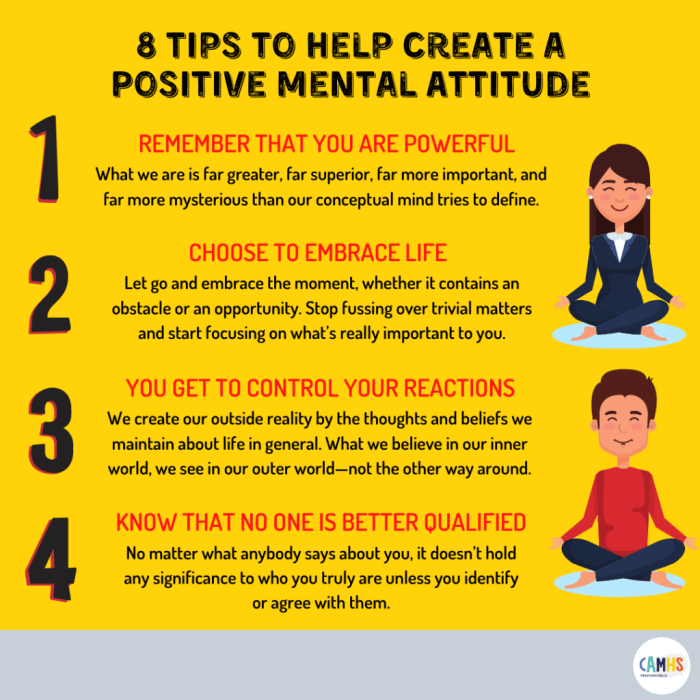
In conclusion, embracing these tips for maintaining a positive mindset every day can lead to a more fulfilling and balanced life, where mental well-being takes center stage. Incorporate these practices into your routine and watch as your mindset transforms for the better.
Query Resolution
How does a balanced diet impact mental wellness?
Eating a balanced diet rich in nutrients can enhance mood and overall well-being, positively affecting mental health.
What are some effective stress management techniques?
Engaging in activities like mindfulness, exercise, and deep breathing can help reduce stress and promote relaxation.
Why is quality sleep important for mental well-being?
Quality sleep is essential for emotional balance and overall health, as it allows the brain to recharge and function optimally.


